
By Grant Warkentin
After two months patrolling international waters in the North Pacific, a joint task force aboard the CCGS Sir Wilfrid Laurier uncovered 52 potential fishing violations.
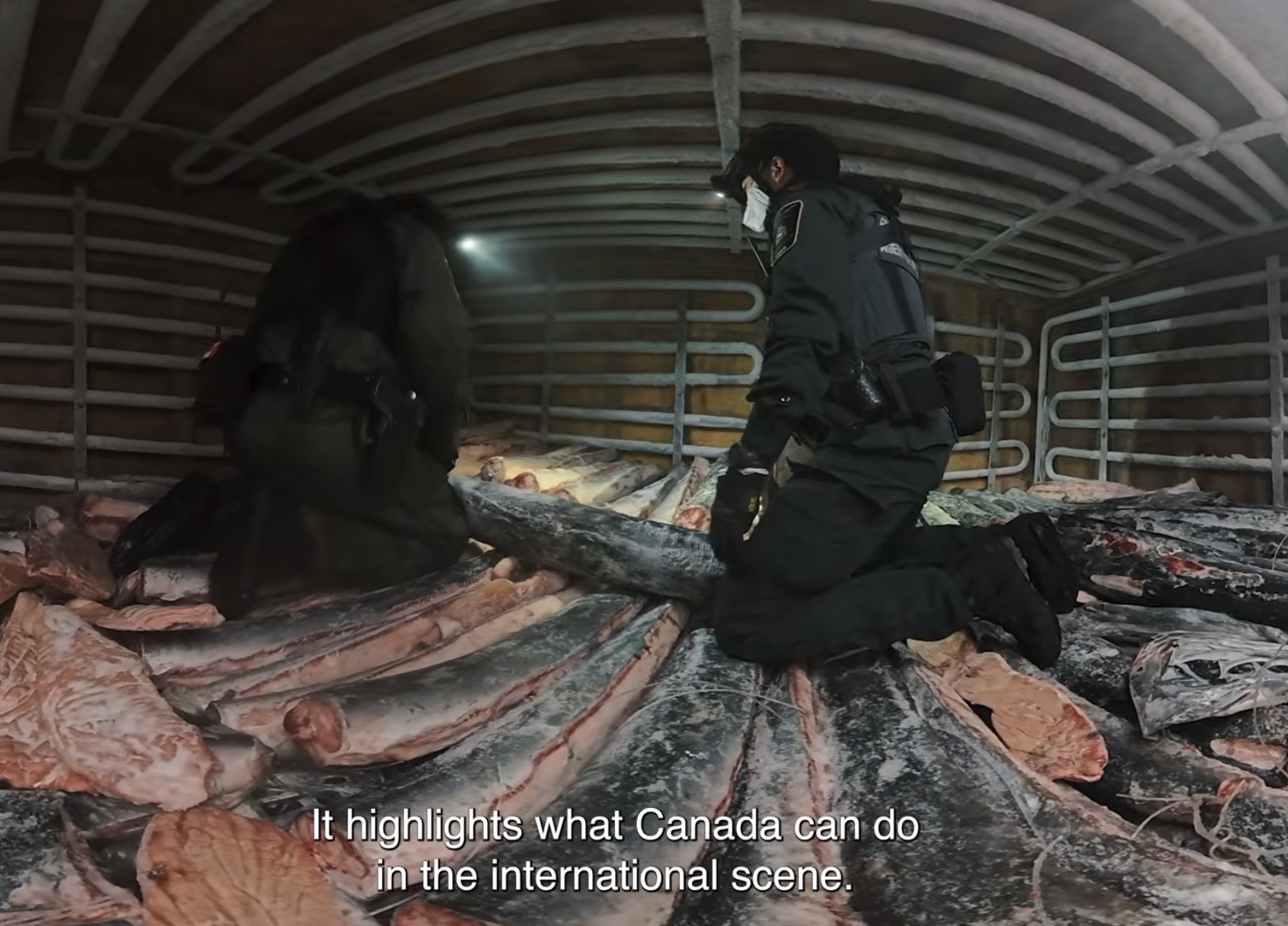
Many involved shark finning, and using prohibited gear to catch sharks. Other potential violations included illegal dolphin kills, pollution violations, and marking requirements.
The task force was also on the hunt for human rights violations – modern-day slavery is common in North Pacific fishing fleets. A 2021 satellite-tracking study estimated that up to a quarter of the world’s industrial fishing vessels were at high risk of using forced labour, and squid-jigging boats, which work the northwest Pacific in large numbers, were the single highest-risk category, with up to 94 percent of them flagged.
The task force, which included officers from Fisheries and Oceans Canada (DFO), the RCMP, Canadian and US Coast Guards, and Japan’s Fisheries Agency, patrolled more than 23,000 kilometres while aboard the Canadian ship for Operation North Pacific Guard. This year, they didn’t encounter any vessels retaining salmon, a major focus of the annual patrol.
Federal officials are calling the absence evidence that the annual patrols are working.
“Protecting fish stocks does not stop at our borders. Canada has taken a key role in the fight against illegal fishing, and I am proud of the fishery officers and Canadian Coast Guard crews carrying out this mission across the Pacific with our international partners,” said Fisheries and Oceans Canada Minister Joanne Thompson in a news release. “This work protects our investments under the Pacific Salmon Strategy Initiative to restore wild Pacific salmon and the ecosystems they depend on.”
The task force was also instrumental in rescuing a group of sailors on a trimaran which became stranded in the Bering Sea. The Strathcona Standard reported the rescue in June.
“During the patrol, the Canadian Coast Guard also brought three Canadians in distress safely home, a reminder of its unwavering commitment to safety at sea,” said David McGuinty, federal minister of National Defence. “I thank Fisheries and Oceans Canada, the Canadian Coast Guard, the RCMP, and our international partners for carrying out this mission with skill and professionalism.”
In total 344 vessels were inspected by air, 30 inspections were conducted on the high seas, hundreds of fishing vessels were monitored, and the task force interacted with more than 500 crew during inspections.
Featured image: Members of the task force inspect the hold of a fishing vessel, searching for any potential violations.


Leave a Reply