
By Grant Warkentin
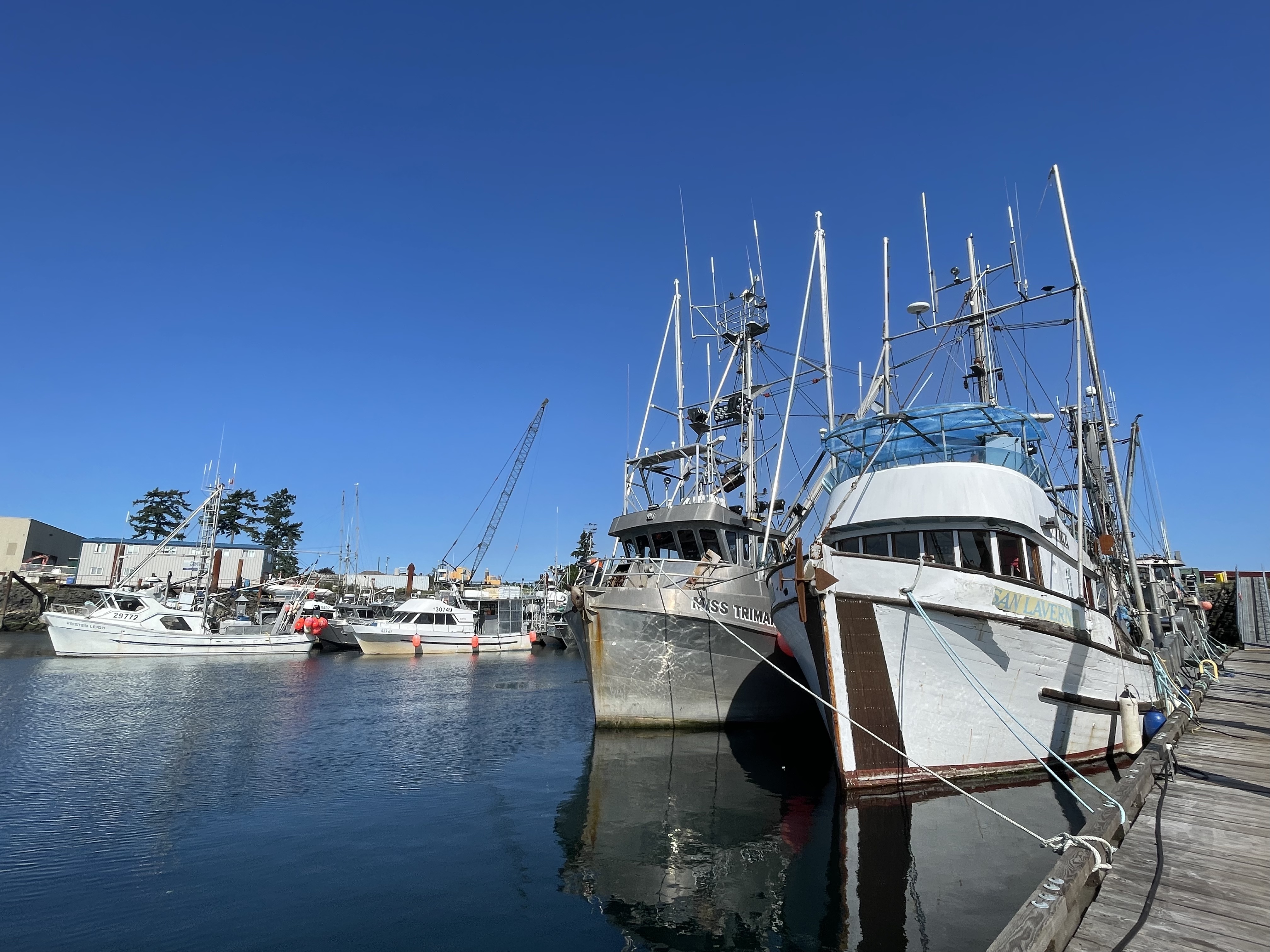
Featured image: Fishing boats at the Discovery Marina in Campbell River on August 12, 2026. Photo by Grant Warkentin
The federal government is looking at overhauling the EI benefit program for commercial fishers, which hasn’t changed much since 1996.
BC’s commercial fishers will be impacted, but they account for less than 10% of all fishing-related EI claims across Canada. That share has declined steadily over the last 20 years, a marked contrast from the East Coast, where claims from Newfoundland and Labrador alone have increased to account for 50% of the national total.
In 2021, the latest year of available data, the program paid out more than $354 million in benefits across Canada.
According to Employment and Social Development Canada, which recently published a report titled “Evaluation of the Employment Insurance Fishing Benefits, 2026,” the ministry will be taking the next year to “Analyze how the qualifying conditions for EI fishing benefits impact the level of support provided to self-employed fishers in a changing fishing industry.”
The report flags June 2027 for the planned completion date, although no action has yet been taken.
The report makes two key recommendations: “review the qualifying conditions for fishing benefits,” and work with Service Canada to “improve officer training on EI fishing benefit regulations” to provide better service to self-employed fishers.
After collecting feedback from individuals and focus groups, the ministry found the number of self-employed fishers in Canada has declined from 38,000 in 2001 to 25,000 in 2021. At the same time, the number of individuals receiving EI fishing benefits declined from 27,513 in 2004 to 20,457 in 2021.
“All six focus groups with 22 participating employers indicated that EI fishing benefits were essential for keeping people employed in the fishing industry and that without these benefits, they did not believe that many would continue to work in the industry because of the nature of the work,” says the report.
Because of the seasonal nature of fishing, most self-employed operators have come to rely on EI fishing benefits – which are structured differently than regular EI benefits – to make ends meet during their off seasons. Across Canada, in 2018, nearly 45% of fishers claimed benefits in both summer and winter during the same year, and did not receive benefits for eight weeks on average between April and July.
Key Findings (verbatim from the report)
- The share of EI fishing claimants who claim both summer and winter benefits increased over the reference period and now averages over 8,500 claimants per year and represented the largest group of claimants. Winter-only claimants averaged below 3,000 throughout the study period and summer-only claimants declined to 8,140 in 2021.
- On average, EI fishing claimants in 2021 were likely to be 50 years old, married, male without dependents, living in a rural area, with a high-school diploma. Fishing benefits claims were concentrated among the Atlantic provinces, Quebec, and British Columbia.
- Based on the EI administrative data, the average total benefit amount received was similar for both regular claimants and fishers who claim benefits for a single season (between $10,000 to $13,000 per claim). Self-employed fishers claiming in both seasons had the highest average weekly benefit rate ($528) and received on average the highest amount of benefits ($21,246 for both claims) in a calendar year. In terms of income, EI fishing claimants had higher total individual annual income (as reported on income tax and benefit returns) than the two groups of EI regular claimants.
- Temporary COVID-19 measures had limited influence on off-season employment. In some focus groups with fishing claimants, participants noted that seasons were sometimes delayed or prices dropped; however, they indicated that their annual income during the COVID-19 pandemic was not drastically impacted.
- EI Fishing claimants rarely worked while on claim during the off-season. Focus group participants explained that jobs were difficult to find in the off-season due to the rural and remote nature of fishing communities. In 2018, about 21% of summer claimants, 19% of winter claimants, and 35% of both season claimants saw their weekly benefit rate reduced.




Leave a Reply