
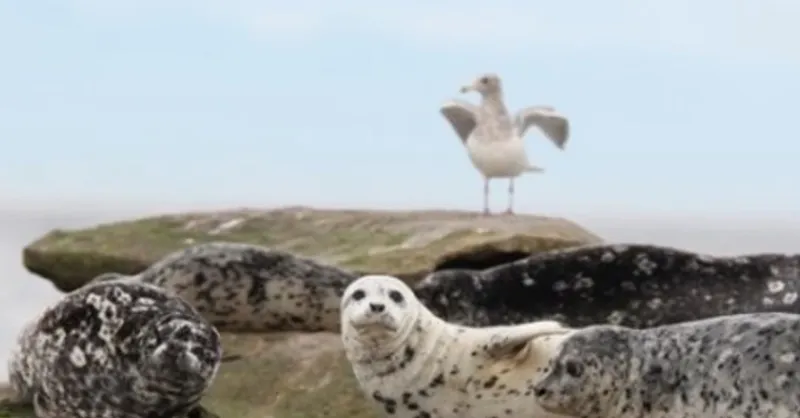
Harbour seals eat a lot less salmon than you might think, according to new research from DFO.
The federal fisheries agency recently shared some of the latest information from ongoing research into the eating habits of harbour seals along BC’s southern coast. While seals are often blamed for gobbling up juvenile salmon during the spring outmigration and adult salmon during spawning season, their impact on salmon populations appears to be smaller than previously assumed.
“After analyzing thousands of harbour seal scat samples in the Strait of Georgia, our West Coast pinniped science team discovered that salmon make up much less of their diet than earlier research suggested, well under 5%,” says a social media post shared on January 29 by DFO. “Seals near river estuaries eat more salmon than those farther away, and diets vary by location and year.”
DFO says the research results show how important it is to continue broad, long-term research to better understand seal impacts on salmon populations.
The research was published late last year in the Canadian Journal of Fisheries and Aquatic Sciences, and looked at data collected between 2015 and 2019 from multiple “haul out” locations along the coast, where seals gather in groups to rest, sleep, and breed. Nearly 3,000 samples were collected from 17 locations.
Researchers found that while samples of seal scat taken from river estuaries had the largest amount of salmon content, up to 5%, samples taken in locations away from rivers had far less, making up as little as half a percent of the seal’s diet. They also found chum salmon were the most common species consumed.
Analyzing the data, researchers found evidence harbour seals prefer to pursue herring and hake, with salmon as a secondary and opportunistic food source. They also found a wide range of variability among locations, suggesting seal diets are shaped by their environment, not by their focus on any particular prey.
They call for more research to better understand the relationships between seals and salmon, and to better inform science-based decisions about salmon fisheries.



Leave a Reply