
By Grant Warkentin
The BC Supreme Court has dismissed a lawsuit against the province by the family of a woman who died tragically on the Ripple Rock Trail in 2018.
Monica Marklinger, a 57-year-old woman from the Kamloops area, was hiking the popular trail north of Campbell River with her daughter, Michelle Hlatky, on July 17, 2018. The summer weather was mild, with easterly winds up to 13 kilometres per hour.
As they neared Nymphe Cove, around the trail’s 3.5 kilometre mark and just past a lookout, Hlatky heard what sounded like a thump and felt part of a falling tree graze her arm. When she turned back to her mother, she realized the older woman had been hit by the tree, suffering serious injuries to her head and leg.
Hlatky, a trained nurse, administered first aid. A passing hiker also provided first aid and called emergency services, which arrived later via the trail and also by boat, through the cove. Marklinger was evacuated to Campbell River, but died from her injuries.
In the weeks after the tragic incident, Marklinger’s widower husband Ross Marklinger and their daughter, Hlatky, raised safety concerns about the trail with the Ministry of Forests, going so far as to meet with Graham Cameron, District Manager of Parks for the province, who is responsible for assessing recreational trails in his jurisdiction for hazards and identifying “danger trees.”
They met with Cameron in Campbell River on July 30, 2018, and in the words of Justice John Gibb-Carsley in his Reasons for Judgment, “the meeting did not go well.” Once Cameron realized he was speaking with Marklinger’s family, he ended the meeting, as he didn’t believe it was appropriate.
After meeting with Cameron the family met with RCMP to thank individual first responders who assisted on the day of the incident. They also visited the paramedic office to file a complaint about an individual paramedic who, according to Hlatky’s testimony, “added to her stress and trauma on the day of the incident” by failing to show adequate compassion, and also failing to make efforts to help save her mother’s life.
They also visited then-MLA for the North Island Claire Trevena to voice their concerns over the trail’s condition, hoping to help prevent another hiker’s injury or death from a falling tree.
“Ms. Hlatky testified that ‘nothing came of that meeting,’” Gibb-Carsley wrote.
The family sued the province and two ministries, alleging the government failed to properly assess and maintain the trail. Their case was heard in Kamloops last year, in late November and early December.
During the trial, the judge heard evidence from Cameron that he had examined the exact tree in question during a trail inspection in March before the incident. He had found it was leaning away from the trail and didn’t pose a danger to hikers. He was chastised by the judge for failing to maintain proper records of his inspection; however, the judge found his action did not amount to “reckless disregard,” as the plaintiffs claimed, and as the tree wasn’t deemed to be a danger, documentation would not have saved anyone’s life.
“The incident is tragic, but in my view, it was accidental and the defendants should not be held liable for its occurrence,” says Gibb-Carsley. “Hiking carries some level of inherent risk of injury and those who decide to hike in the wilderness accept the risk of venturing into an unpredictable environment.”
The judge qualified Dean McGeough, a Registered Forestry Professional, to investigate the cause of the tree fall. McGeough concluded “a root-plate collapse, where the basal root system shears or fails below ground level,” is what caused the tree to come down.
“It is very difficult if not impossible to predict with certitude when a tree will fall, especially so if it does not present visual clues above the soil regarding the deterioration of the roots that is invisible to the assessor,” the judge said, summarizing the expert evidence.
Gibb-Carsley commended the family for their composure and compassion during the trial, after enduring an event “that is likely one of the most, if not the most, traumatic events they have experienced in their lives.”
He also commended counsel for both parties for treating all witnesses with respect and compassion.
Marklinger’s family did not ask for any costs.
“While the plaintiffs were unsuccessful in this litigation, in my view, there was merit in their claim,” said Gibb-Carsley. “The plaintiffs were not driven by a pursuit of a monetary award, but instead to seek some form of accountability… and potentially improve how the defendants maintained recreational trails in British Columbia.”
Even though there’s no evidence to suggest a danger tree assessment for Ripple Rock Trail four months after Marklinger’s death was done in response to the tragic incident, it certainly helped achieve the family’s goals to make the trail safer. After the report was released, in December 2018, crews cut down 23 trees along the trail, seven of them in close proximity to where Marklinger had been struck.
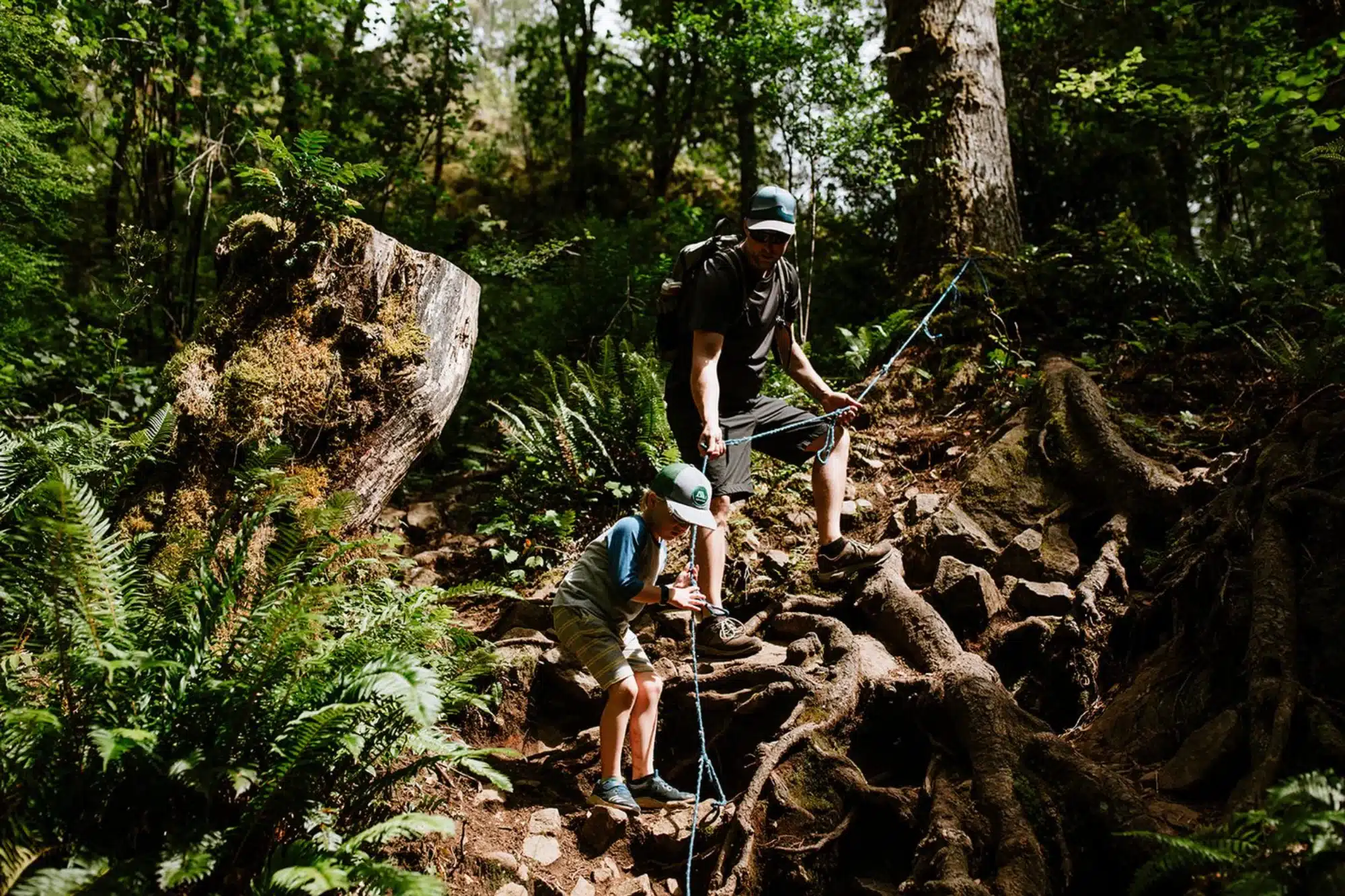
Featured image: Hikers on the Ripple Rock Trail. Photo from campbellriver.travel


Leave a Reply