

By Grant Warkentin
While the federal government claims to be spending nearly $1.1 billion to “protect and restore Pacific salmon,” it’s unclear where hundreds of millions of tax dollars from the last round of funding went.
This week the federal government announced nearly $413 million in funding over the next five years to “renew” the Pacific Salmon Strategy Initiative (PSSI). The initiative was first announced on June 8, 2021, with $647 million in funding to “stem the devastating historic declines in key Pacific salmon stocks and rebuild these species to a sustainable level.”
However, an additional $98.9 million was added to the PSSI shortly after it started, to cover “amortization over 5 years.” This figure was not included in the government’s latest claim of spending “nearly $1.1 billion” over ten years.
Paying harvesters to quit fishing
Some of the PSSI funding, $123 million, went to “harvest transformation programs,” particularly the Pacific Salmon Commercial Licence Retirement Program, which paid harvesters “fair market value” to have their salmon licences retired.
That funding also went to “Indigenous communal commercial salmon licence eligibility holders who have been affected by the long-term closure of salmon fishing in areas of concern,” all part of Fisheries and Oceans Canada (DFO)’s stated goal to “transition to a smaller commercial harvesting sector” in BC.
Paying First Nations to watch salmon farms close
Approximately $100 million of PSSI funding went to the BC Salmon Restoration and Innovation Fund (BCSRIF), which has spent $253 million on 170 projects around BC during the last five years.
The ‘Namgis First Nation was the single largest recipient of that funding, receiving nearly $11.6 million for a “Broughton wild salmon restoration project” and for “Implementation of the Broughton First Nations Indigenous monitoring and inspection plan.”
According to Mowi, the world’s largest salmon farmer which closed 12 farms in the region between 2019 and 2024, the “monitoring and inspection plan” established “First Nations oversight of fish farms operating in the territories of the First Nations during the orderly transition of fish farms in the area.” Mowi said the plan would result in “First Nations leading the monitoring of fish health, sea lice, pathogens, disease agents and diseases before and after introduction of fish into the fish farms.”
In other words, the farms in the Broughton operated as normal, growing salmon to harvest size for the last time before they were decommissioned for good, while First Nations were paid $7.4 million to watch. It’s unclear how the ‘Namgis and partner Nations spent the money “monitoring” the farms.
The ‘Namgis also received more than $2 million in BCSRIF funding to build an “independent BC First Nations genomic lab.” Neither the lab nor the “wild salmon restoration project” appear to have made it past “first steps.”
Where did the money go?
That leaves $424 million remaining from the original PSSI commitment, and it’s unclear how that money has been spent, or if some is still waiting to be allocated.
What is clear is that outcomes promised in the original PSSI commitment, particularly promises to restore salmon habitat, have not been achieved.
The April 7 news release claims the first phase of PSSI funding restored 15.7 million cubic metres of wild Pacific salmon habitat, or 1,570 hectares, across all of BC over five years. One of the projects funded through the PSSI was $5 million for Ducks Unlimited Canada to restore salmon habitat in the Fraser River Estuary, which alone covers 32,000 hectares of salmon habitat in the Lower Mainland.
One of the initiatives created with an undetermined amount of PSSI funding was the “Restoration Centre of Expertise,” which mostly amounts to a series of workshops held over the past five years to talk about how to restore salmon habitat.
DFO’s own public-facing PSSI website downplays the importance of habitat restoration, stating in the FAQ that “habitat restoration is just one tool in the toolbox. It is arguably much easier to protect habitat than it is to restore it.”
DFO has a “Habitat Restoration Priorities Plan” for the Pacific region, but it’s only available by written request to members of what DFO calls the “restoration community,” and not to media or the public.
Hatcheries upgraded, costs unknown
Some of that $424 million went to “modernizing and retrofitting over 70 hatchery facilities, and the construction of three new hatcheries which will support rebuilding of stocks of conservation concern.” However there is no publicly available breakdown of how that money was spent, which hatcheries were modernized and retrofitted, or what improvements have been made.
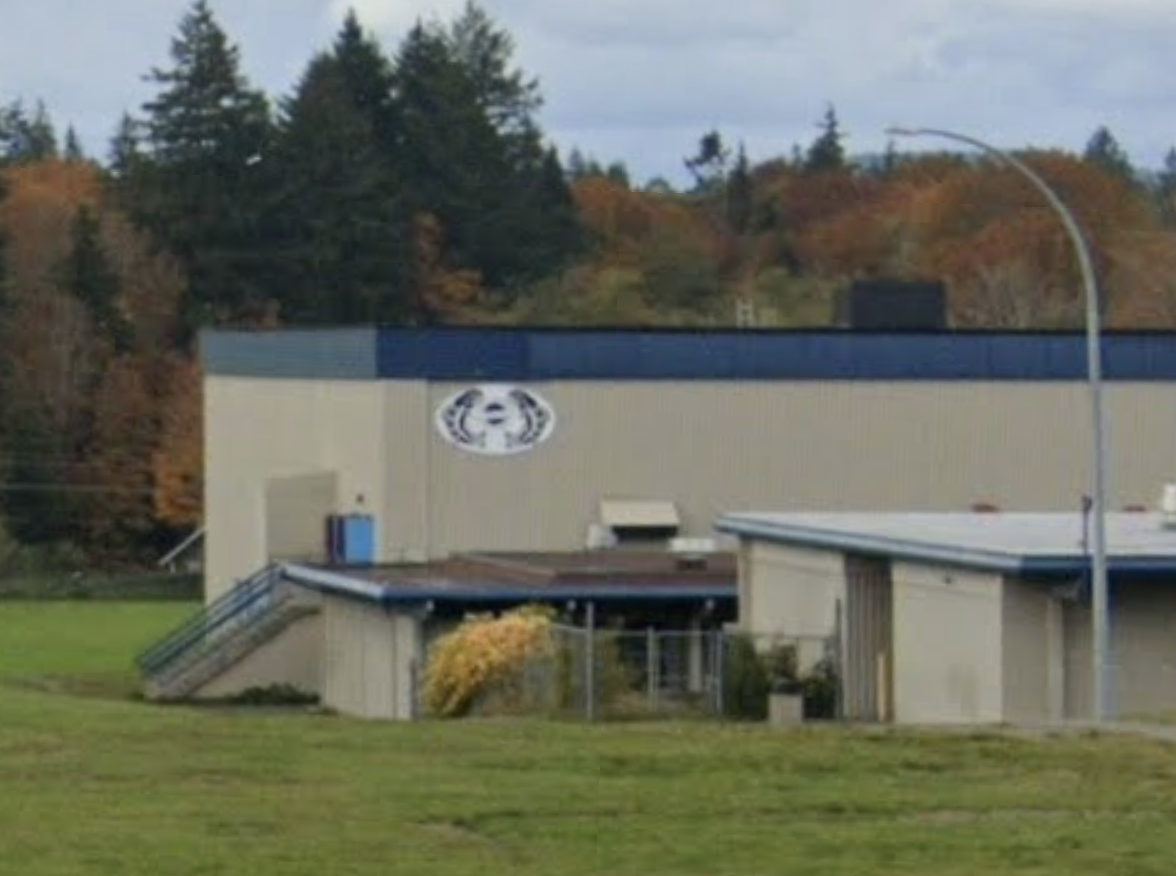
Some specific hatcheries were highlighted by DFO in its “featured stories” about how tax dollars are spent to help salmon, including the Rosewall Creek hatchery at Fanny Bay on Vancouver Island (shown in this post’s featured image). None of them detail how the money was spent on improvements.
Real science goes unnoticed
An unknown amount of PSSI funding did go towards 49 science projects done during the past five years, which went unrecognized in the government’s renewal announcement this week. Most of them are “hard science” projects, data collection in the field over time to observe, track, and measure salmon and the factors affecting their survivability. However, none were mentioned by the minister, and the word “science” is only mentioned once in the April 7 statement.
Ideology over science
The government’s ideology driving the PSSI appears to have changed from 2021, which was framed as an urgent, science-based response to climate change and other factors driving declines across all Pacific salmon species. According to the government’s own public-facing website explaining the PSSI, the focus changed almost immediately after the program started, from an urgent attempt to rebuild stocks, to managing decline instead, while aiming to “protect and rebuild stocks where possible.”
The PSSI’s current “guiding principles” make no mention of science or salmon, or rebuilding stocks. The first principle is “Reconciliation with Indigenous peoples,” and states “positive relationships and collaboration with First Nations will help to achieve solutions and shared objectives.” The fifth and final principle, “Partnerships and collaboration,” mentions the “general public” dead last in its list of priorities for “advanced collaboration.”
The focus is significantly different from when the program was first announced, which originally described its “four key pillars” as “conservation and stewardship; salmon enhancement; harvest transformation; and integration and collaboration.”
The ideological shift towards placing Indigenous “integration and collaboration” first is also apparent in the information available about which projects were funded through BCSRIF, which shows 73% of all approved projects involved First Nations, and 40% were “Indigenous-led.”
The list of BCSRIF projects is dominated by opaque “plans” and “initiatives,” “assessments,” “surveys,” and “demonstrations.” However some were designed with measurable outcomes. For example, the Nature Trust of BC received more than $12 million to collect exhaustive data in 20 estuaries along the BC coast to better inform future fisheries decisions. The Pacific Salmon Foundation received nearly $10 million to physically tag salmon from different species and track them through their lifecycles, to find what sort of bottlenecks to their survivability they face on the coast.
Practical projects funded in Strathcona region
The Homalco First Nation received $775,000 for a “Bute Inlet salmon viability strategy,” to bolster the Orford Bay hatchery and salmon habitat restoration after a catastrophic landslide in the inlet in 2020.
“In response to the massive habitat destruction triggered by glacial melting in the Elliot Creek Watershed and severe storm destruction of the Orford Bay hatchery in 2020, Homalco First Nation will lead a project to reconstruct the Homalco-Taggares Hatchery in Orford Bay as a Multi-Species Hatchery and Stewardship Center,” says the project’s official description.
The Greenways Land Trust received nearly $1.7 million for “estuary salt marsh and eelgrass restoration” at the mouth of the Campbell River.
According to the official project description, the money went to “restore approximately two hectares of the Campbell River Estuary towards pre-development conditions. Using process-based restoration techniques, the project will re-create salt marsh and eelgrass habitat that has been lost due to historic logging practices in the estuary and improve connectivity to the river by adding new tidal channels.”
The A-Tlegay Fisheries Society received $1.1 million to set up a traditional-style fish trap in the Campbell River.
“Historically, heart and chevron shaped traps were used extensively by First Nation communities along the estuary to capture adult salmon prior to the development of commercial fisheries. Recent revitalization of fish traps as a terminal fishery in other areas along the coast has been shown to be successfully at catching and selectively harvest hatchery marked salmon species while releasing wild (unmarked) salmon and steelhead of conservation concern,” says the project’s official description.
How will new funding be spent?
While uncertainty remains over how $424 million from the first round of PSSI funding was actually spent, it’s also unclear how the federal government plans to allocate the next round of $414 million.
“The first phase of the Pacific Salmon Strategy Initiative has shown what is possible when we work together. Through collaboration and strong partnerships, we have restored essential salmon habitat, modernized and expanded hatchery programs, improved fishery management practices, and advanced new approaches to protect vulnerable salmon stocks,” said Joanne Thompson, fisheries minister, in an April 7 statement. “But the challenges facing wild Pacific salmon are far from over. Through the renewed PSSI, our government is committing to the next chapter of this work—one grounded in science, guided by Indigenous leadership, and driven by the shared responsibility to protect salmon for generations to come.”



Leave a Reply