
By Grant Warkentin
The natural gas power plant in Campbell River is needed to meet the Island’s future power needs, BC Hydro now believes.
With the public utility facing a looming 500 megawatt deficit in power capacity, and no clean energy projects coming online any time soon, it’s proposing to purchase the plant and operate it directly.
In a filing with the BC Utilities Commission May 28, BC Hydro said the Crown corporation is now “in confidential negotiations related to the Island Generation natural gas generation facility and the McMahon cogeneration facility to meet the need for capacity in the 2026 Reference Load Forecast.”
The McMahon facility is in northeastern BC, near Fort St. John.
The details haven’t been formally confirmed, but the “confidential negotiations” involve a proposal for BC Hydro to purchase and operate the Campbell River plant, instead of relying on temporary contracts with the current owner.
Good news for potential business investors
Campbell River Mayor Kermit Dahl has been fighting to keep the power plant from being mothballed, and says the news is great for the whole region.
“Without this news, we would’ve had virtually no opportunity for economic development,” he said. “We have had proponents come that wanted to locate a business in Campbell River, an industry, whether it was a data centre or land-based aquaculture.
“The one thing that we couldn’t assure people of is that there would be the electricity that they required.”
Dahl said the old pulp and paper mill site north of town has been eyed by numerous industries since the mill closed permanently in 2010. The site is attractive because it has plenty of industrial-zoned land, and direct water access to the ocean. But with no guarantees for a consistent power supply, even with the natural gas power plant right next door to the site, potential investors moved on to other communities.
Execution reprieved
In April the Strathcona Standard reported the plant was facing permanent shutdown this fall, after its contract with BC Hydro is set to expire. Last year a cold snap required its operation for several weeks to meet the increased demand for heating energy. As we reported earlier, the utility has an ideological mandate to provide “reliable, affordable, and renewable electricity,” making it reluctant to use the plant – in 2022 the utility said the Campbell River facility “has been a source of BC Hydro’s greenhouse gas emissions in the past.”
This spring, when BC Hydro revised its power need forecasts for the next five years, it realized it needed to find 500 more megawatts of power as soon as possible.
“This has resulted in a need for capacity in the early years of the planning horizon, prior to new clean and renewable capacity resources coming into service,” says the May 28 filing. “Continued operation of the existing Island Generation natural gas generation facility and the McMahon cogeneration facility will provide approximately 400 MW of dependable capacity to meet the increased near-term need for capacity resources. Island Generation is expected to provide BC Hydro with 275 MW of dependable capacity and McMahon is expected to provide BC Hydro with 120 MW of dependable capacity.
“Island Generation would be operated primarily to meet peak load in winter while McMahon is a cogeneration facility associated with a continuous large industrial operation and accordingly, would operate year-round.”
Clean energy still the long-term goal
That doesn’t mean the utility is giving up on clean energy.
“BC Hydro continues to explore viable new capacity resources that are capable of reliably providing capacity during two-week cold spells in the winter when we encounter our peak demand,” says the filing. “The resources we are exploring include large storage hydro (including long duration pump storage), geothermal, and natural gas peaking plants that would operate only for capacity as a cost-effective means of backing up the clean energy from intermittent resources such as wind while limiting greenhouse gas emissions.”
BC Hydro imports power from Alberta and American energy sources every year, much of which is generated by coal and natural gas power plants. Last year BC Hydro imported nearly 8,400 gigawatt-hours of power, a drop from nearly 14,000 in 2024, offset by the Site C hydro dam coming online.
Making more use of the Campbell River and McMahon plants may help BC Hydro reduce its reliance on imported power.
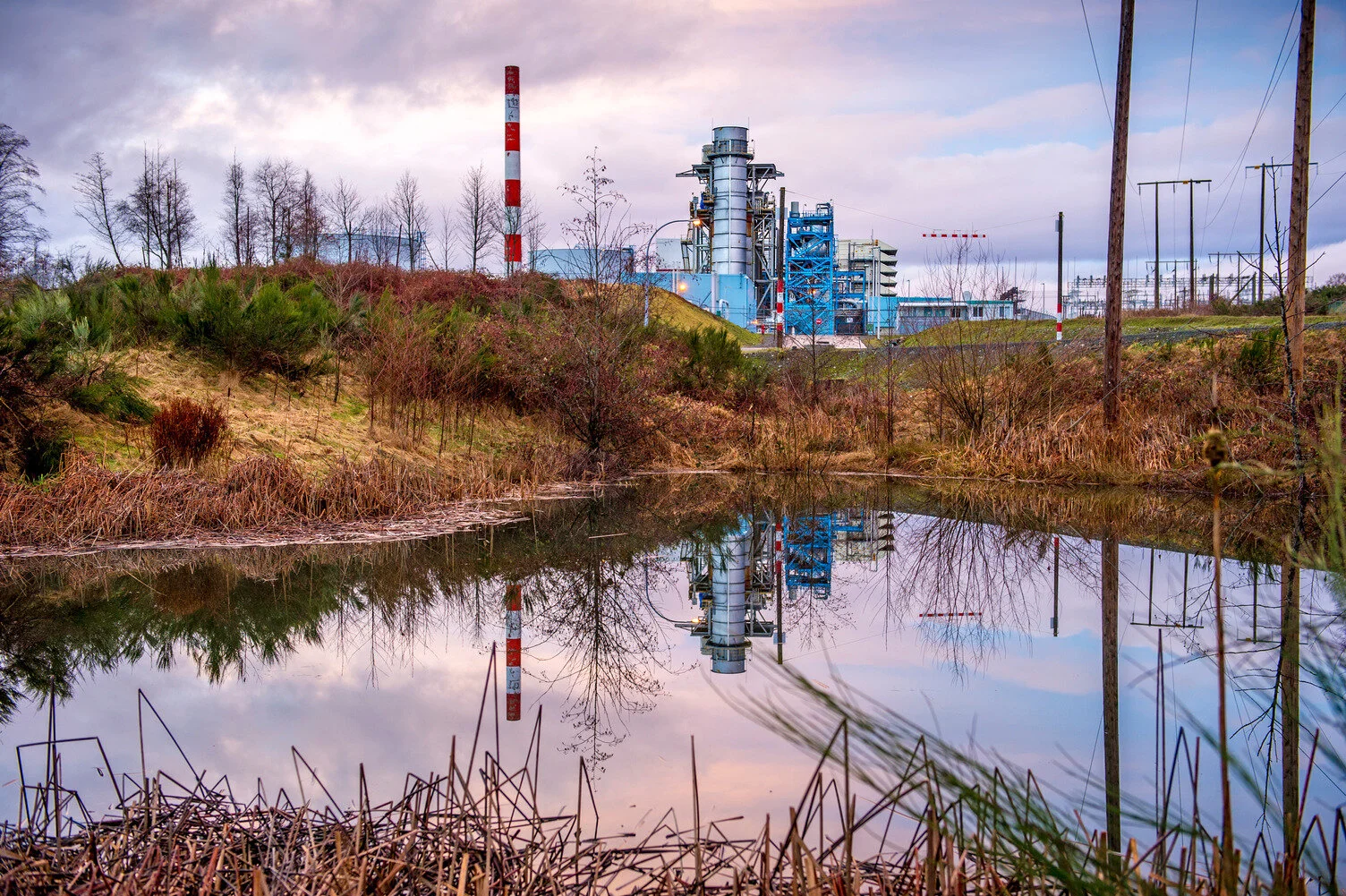
Featured image: Campbell River’s natural gas power plant, capable of producing 275 megawatts on demand. Image from Capital Power




Leave a Reply