
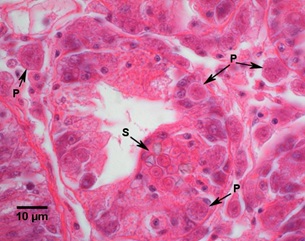
A pathogen which occurs naturally in Pacific oysters but is lethal to Atlantic oysters has been genetically sequenced for the first time ever by East Coast scientists.
The New Brunswick Research and Productivity Council (RPC) is a New Brunswick provincial Crown corporation. It announced the achievement last week, a first in the entire world.
“Sequencing the MSX genome gives the oyster industry something it has never had before, a complete map of the pathogen’s biology,” said RPC in a statement. “This knowledge will accelerate the development of disease‑resistant oyster strains, improve early detection, and strengthen long‑term sustainability for growers.”
The council says the achievement positions New Brunswick and Canada at the forefront of global aquaculture innovation.
MSX is an abbreviation for the “Multinucleate Sphere Unknown” disease which is caused by the Haplosporidium nelsoni parasite. It occurs naturally in Pacific oysters and originated in Asia. Pacific species are mostly resistant to the disease, but species in the Atlantic Ocean are not.
Since the 1950s, MSX has devastated oyster populations multiple times along the east coast of North America, earning a reputation as one of the most economically devastating pathogens in US history. In 2024, it was first detected in Prince Edward Island, prompting federal and provincial governments to pledge funding into research to help struggling harvesters and farmers.
MSX has been detected in shellfish harvested and farmed in BC as well as American Pacific states, but has not been associated with any mortalities. It poses no risk to human health.



 The Strathcona Standard
Leave a comment