
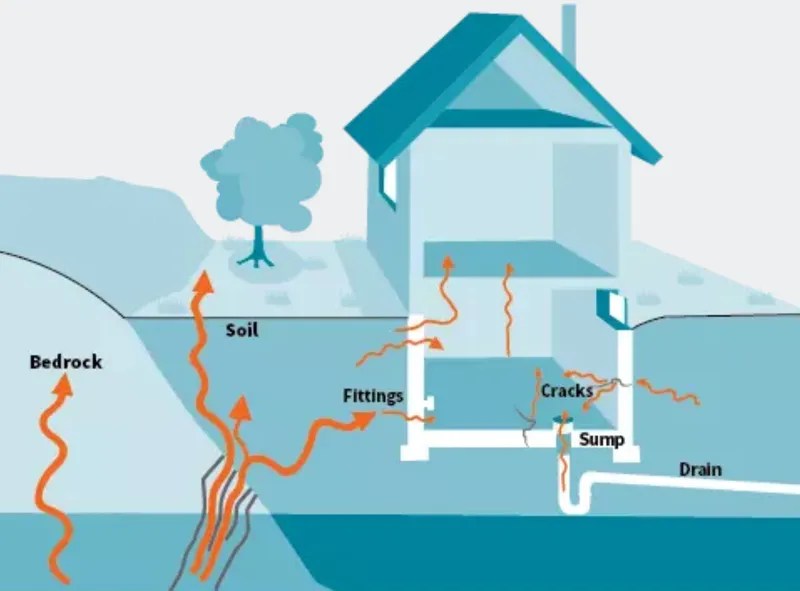
Most homes in the Strathcona region are safe from exposure to an unavoidable cancer-causing gas, but some will need renovations.
The Strathcona Regional District reports the results from an awareness campaign last year about radon gas show most homes in the region are safe, with 98 per cent of homes below Health Canada’s safe guidelines for exposure. However, two per cent of homes exceeded the threshold. The federal agency recommends homes with unusually high radon levels get fixed within two years.
“These results are reassuring overall, but they also confirm an important message: the only way to know your home’s radon level is to test,” said Strathcona Regional District Board Chair Mark Baker in a news release. “Even in areas where average levels are low, some homes can still have elevated radon. Testing is simple, affordable, and one of the best steps residents can take to protect their family’s long-term health.”
Radon gas occurs naturally and most humans are exposed to it every day in trace amounts. However, the gas can be harmful when concentrated indoors, such as in crawl spaces and basements. In Canada, it’s the number one cause of lung cancer among non-smokers.
Health Canada describes radon as a “radioactive gas that occurs naturally when the uranium in soil and rock breaks down. It is invisible, odourless and tasteless. When radon is released from the ground into the outdoor air, it is diluted and is not a concern. However, in enclosed spaces like homes, it can accumulate to high levels. High radon levels can be a risk to the health of you and your family.”
Last winter the Strathcona Regional District distributed 117 radon test kits to volunteer homes across the region, including Campbell River, Tahsis, Zeballos, and Oyster River. Funding for the testing was provided by Health Canada.


 The Strathcona Standard
Leave a comment